
Commercial kitchen inspection — Al Quoz Industrial Area
UV torch reveals 140+ concealed entry vectors invisible under standard lighting
Your Tenants See a Building.
We See 140 Entry Points.
Technical pest management for Dubai's commercial properties — certified against the standards your municipality inspector will actually check.
Field Briefings by Pest & Property Type
Select a pest type and property category in the sidebar to jump to the relevant briefing. Each entry covers cause, municipality requirements, treatment protocol, and monitoring.
Cockroach Control — Hotel
A single guest report of cockroach activity triggers mandatory DM investigation. 48-hour response window before formal complaint registration.
CAUSE & VECTOR
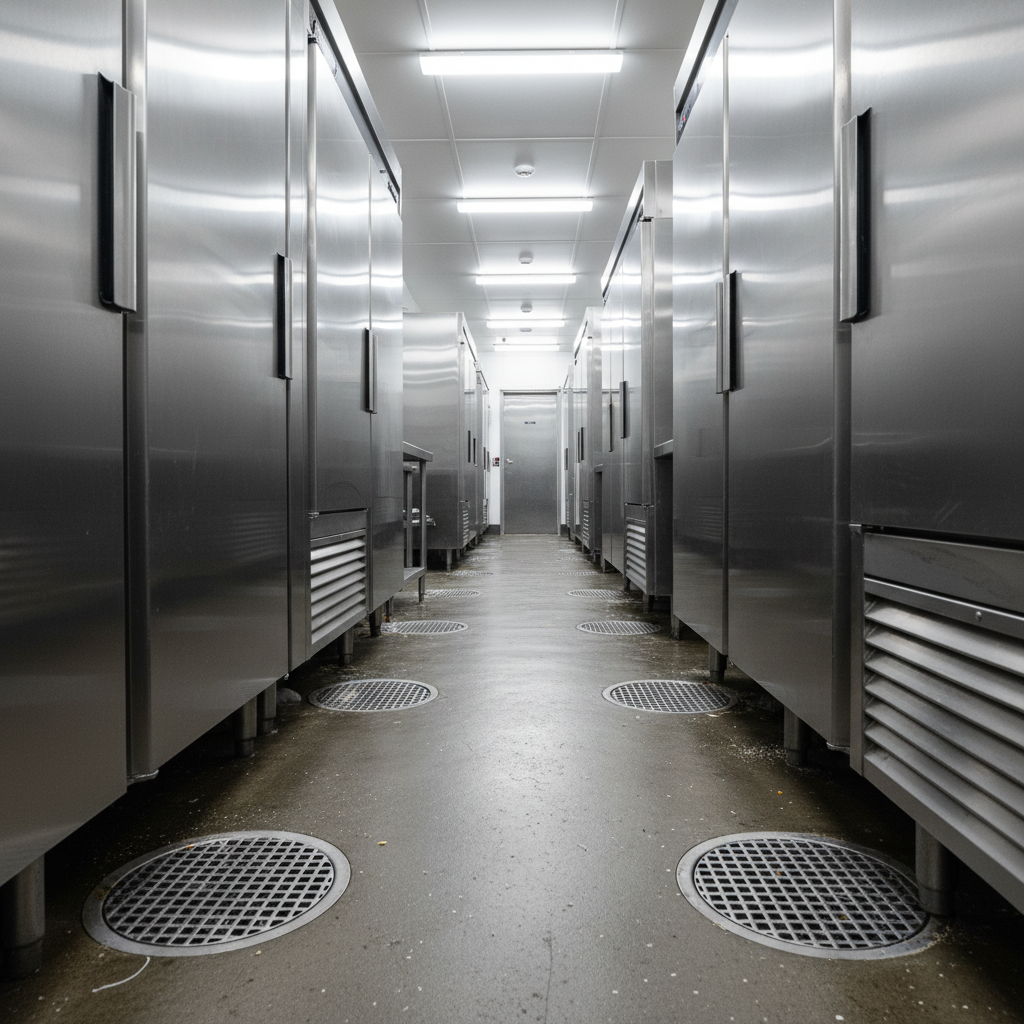
German cockroaches (Blattella germanica) colonise F&B back-of-house through hollow stainless steel tubing, drain sumps, and compressor cavities in refrigeration units. A single gravid female produces 300+ offspring in 90 days. Hotel kitchens operating 18+ hours daily maintain the 25–30°C temperature and moisture gradient these species require.
MUNICIPALITY REQUIREMENT
Dubai Municipality Food Safety Department requires documented Integrated Pest Management (IPM) records with monthly technician sign-off. HACCP Prerequisite Programme 4 mandates evidence of corrective action within 24 hours of any sighting. DM Circular 2019 specifies gel bait placement logs must be retained for 12 months.
TREATMENT PROTOCOL
Initial UV inspection of all F&B back-of-house, drain sumps, and refrigeration compressor bays
German cockroach gel bait (Maxforce FC Magnum) placed at all harbourage points — not sprayed
Insect light traps (ILTs) installed at kitchen entry points and near dishwashing stations
Drain treatment with enzyme-based bio-cleaner to eliminate organic matter biofilm
Compressed air flush of hollow steel tubing and cable conduits
Physical exclusion: silicone sealing of pipe penetrations through walls and floor slabs
ONGOING MONITORING
Monthly scheduled visits with gel bait replenishment, ILT catch count logging, and digital report submitted to your food safety file within 48 hours. Emergency call-out within 3 hours for any sighting during operational hours.
FIELD RESULT
Reduced German cockroach sightings by 97% across 14 F&B outlets in DIFC within 22 days. Zero DM non-conformances recorded across all 14 properties during subsequent audit cycle.
Cockroach Control — Restaurant

CAUSE & VECTOR
Restaurant supply chains are the primary vector — cardboard boxes, produce crates, and dry goods deliveries introduce egg cases (oothecae) weekly. In multi-outlet restaurant groups operating shared central kitchens, a single infestation point can seed all locations through shared delivery vehicles. Oriental cockroaches favour floor drains and grease traps.
MUNICIPALITY REQUIREMENT
DED trade licence renewal requires a valid pest control contract from a DM-approved contractor. Municipality inspectors check gel bait placement maps, technician visit logs, and corrective action records. Restaurants with outdoor seating require quarterly perimeter treatments documented separately.
TREATMENT PROTOCOL
Full drain camera inspection to identify grease trap build-up and drain crack harbourage
Crack-and-crevice treatment with residual insecticide in non-food-contact areas only
Gel bait matrix across all food storage, prep, and cooking zones
Grease trap biological treatment to eliminate organic attractant
Staff briefing on delivery inspection protocol — all cardboard inspected before entry
Perimeter granular bait for outdoor dining and kitchen loading dock
ONGOING MONITORING
Bi-weekly visits for high-volume restaurants, monthly for lower-turnover outlets. Digital compliance dossier updated after each visit — ready for DED and DM inspection at 24 hours notice.
FIELD RESULT
Cleared active German cockroach infestation across 6-outlet Jumeirah restaurant group in 18 days. Subsequent DM audit across all 6 locations: zero pest-related observations.
Cockroach Control — Warehouse

CAUSE & VECTOR
Warehouse and logistics facilities in Al Quoz and Jebel Ali receive hundreds of inbound pallets weekly. American cockroaches (Periplaneta americana) enter through loading dock gaps, hollow pallet boards, and drainage channels connecting to municipal sewer lines. High ceilings and rack systems create undisturbed harbourage zones unreachable by standard treatments.
MUNICIPALITY REQUIREMENT
HACCP-certified food storage warehouses require quarterly pest surveys with written reports. DM Circular 2019 mandates that any food-grade storage area maintain a documented IPM programme. Tenants of free zone warehouses (JAFZA, DAFZA) must provide pest control certificates to zone authority annually.
TREATMENT PROTOCOL
Elevated inspection using scissor lift for rack tops, ceiling beams, and HVAC ducts
Loading dock gap sealing with commercial-grade door sweeps and brush strips
Sewer line treatment: boric acid dust in drain channels, enzyme cleaner in sumps
Pallet inspection zone marking — designated quarantine area for new inbound pallets
Residual spray treatment of non-product floor perimeter with 90-day residual product
Rodent and cockroach monitoring station network mapped to facility plan
ONGOING MONITORING
Monthly scheduled inspection with full facility walk-through. Monitoring station catch data entered into digital log accessible to your HACCP auditor. Annual re-certification report for free zone authority submission.
FIELD RESULT
Eliminated American cockroach infestation in 12,000 sqm Al Quoz cold storage facility in 30 days. JAFZA annual compliance certificate issued without observation.
Cockroach Control — Residential Tower
CAUSE & VECTOR
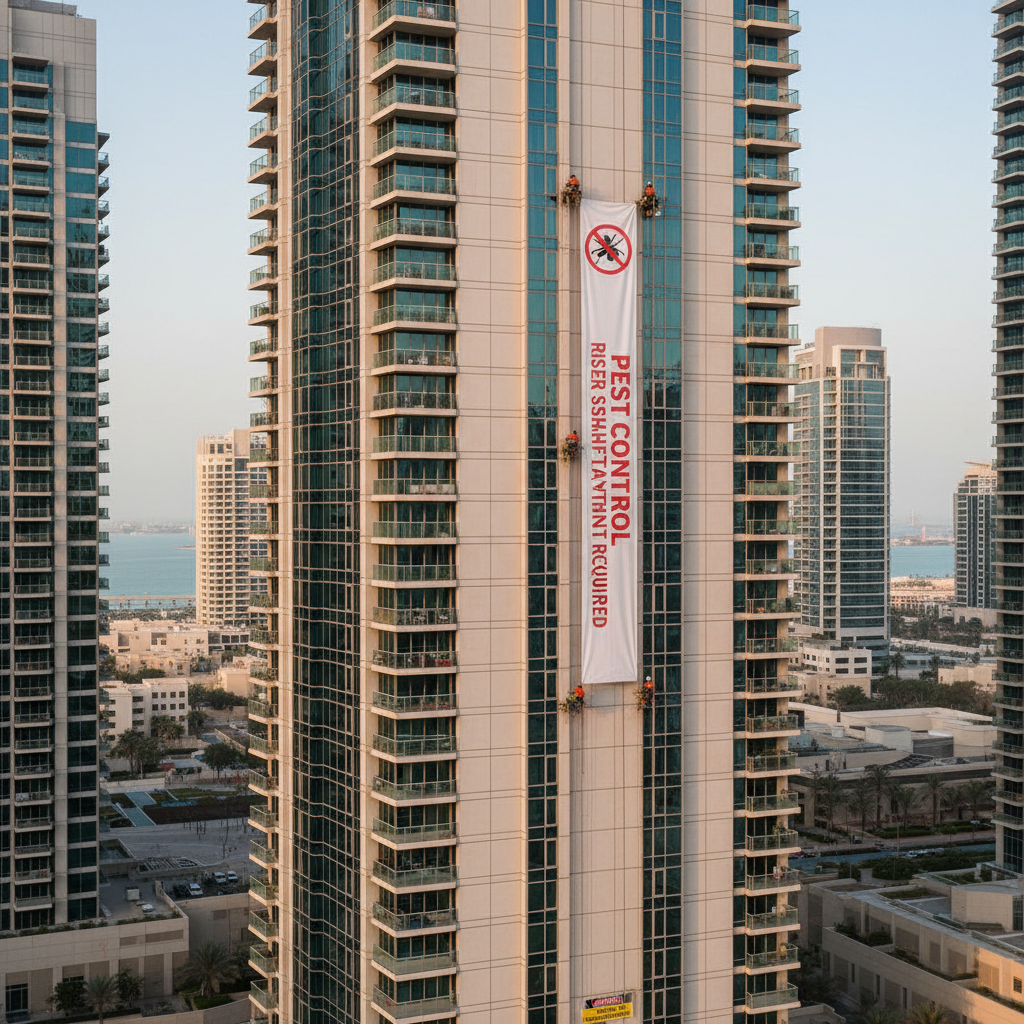
In 50-floor residential towers, cockroaches travel vertically through riser shafts, utility ducts, and shared drainage stacks. A single infested unit on floor 3 can seed floors 8, 15, and 22 within 60 days through plumbing penetrations. Building management is legally responsible for common area treatment under Dubai Tenancy Law.
MUNICIPALITY REQUIREMENT
Building management companies must maintain pest control contracts covering all common areas. DM can issue notices to building owners for pest infestations visible in lobbies, parking, or service corridors. Individual unit treatment requires tenant consent but common area treatment is building management's obligation.
TREATMENT PROTOCOL
Common area survey: lobby, mail room, service corridors, parking deck, pump rooms
Riser shaft treatment: gel bait and dust at all accessible penetration points
Shared drainage stack treatment with enzyme cleaner on each floor via cleanout access
Unit-level treatment offered to individual tenants — coordinated with building management
Physical exclusion of all visible pipe penetrations in service corridors and plant rooms
Resident communication protocol — treatment schedule posted 48 hours in advance
ONGOING MONITORING
Quarterly common area inspections with building management sign-off. Annual full-building survey report submitted to building management company for RERA file.
FIELD RESULT
Cleared active cockroach infestation in 340-unit tower in Deira within 45 days covering all common areas and 68 consenting units. Zero RERA complaints logged in subsequent 6 months.
Rodent Control — Hotel
A single guest photograph of rodent evidence shared on TripAdvisor triggers review flags. Containment within 6 hours is the operational standard.
CAUSE & VECTOR
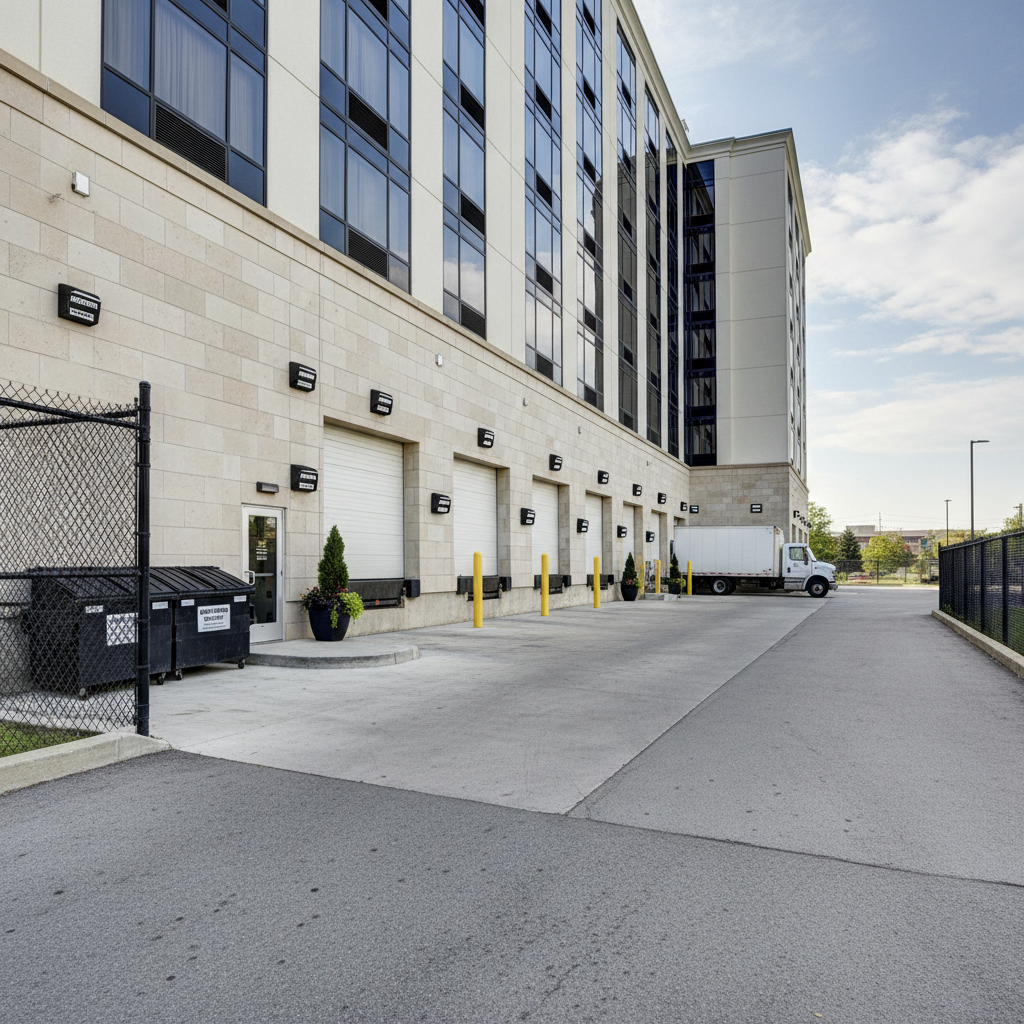
Norway rats (Rattus norvegicus) enter hotel properties through loading dock gaps wider than 12mm, drain pipe failures, and landscaping soil adjacent to building foundations. Roof rats (Rattus rattus) access upper floors via tree branches touching the building envelope and roof-level HVAC penetrations. A single female can produce 84 offspring per year.
MUNICIPALITY REQUIREMENT
DM Food Safety requires rodent bait station maps and monthly inspection records for all hotel F&B operations. Any rodent evidence in a guest area triggers mandatory reporting and corrective action within 24 hours. HACCP auditors check bait station tamper-evidence and catch records.
TREATMENT PROTOCOL
Perimeter survey identifying all entry vectors: drains, gaps, landscaping contact points
Tamper-resistant bait stations installed at perimeter and all F&B back-of-house areas
Snap trap matrix in non-food areas with daily monitoring during active infestation
Drain survey: CCTV inspection of main drain lines for rat runs and entry points
Physical exclusion: steel mesh at all drain openings, door sweeps on loading dock doors
Tracking dust application in roof void and false ceiling access points
ONGOING MONITORING
Weekly bait station checks during active programme, monthly thereafter. Full catch count report with bait station map submitted to your food safety file monthly.
FIELD RESULT
Eliminated roof rat activity across 5-star Jumeirah property (380 rooms) within 14 days. No guest complaints or DM observations in subsequent 18-month monitoring period.
Rodent Control — Restaurant
CAUSE & VECTOR
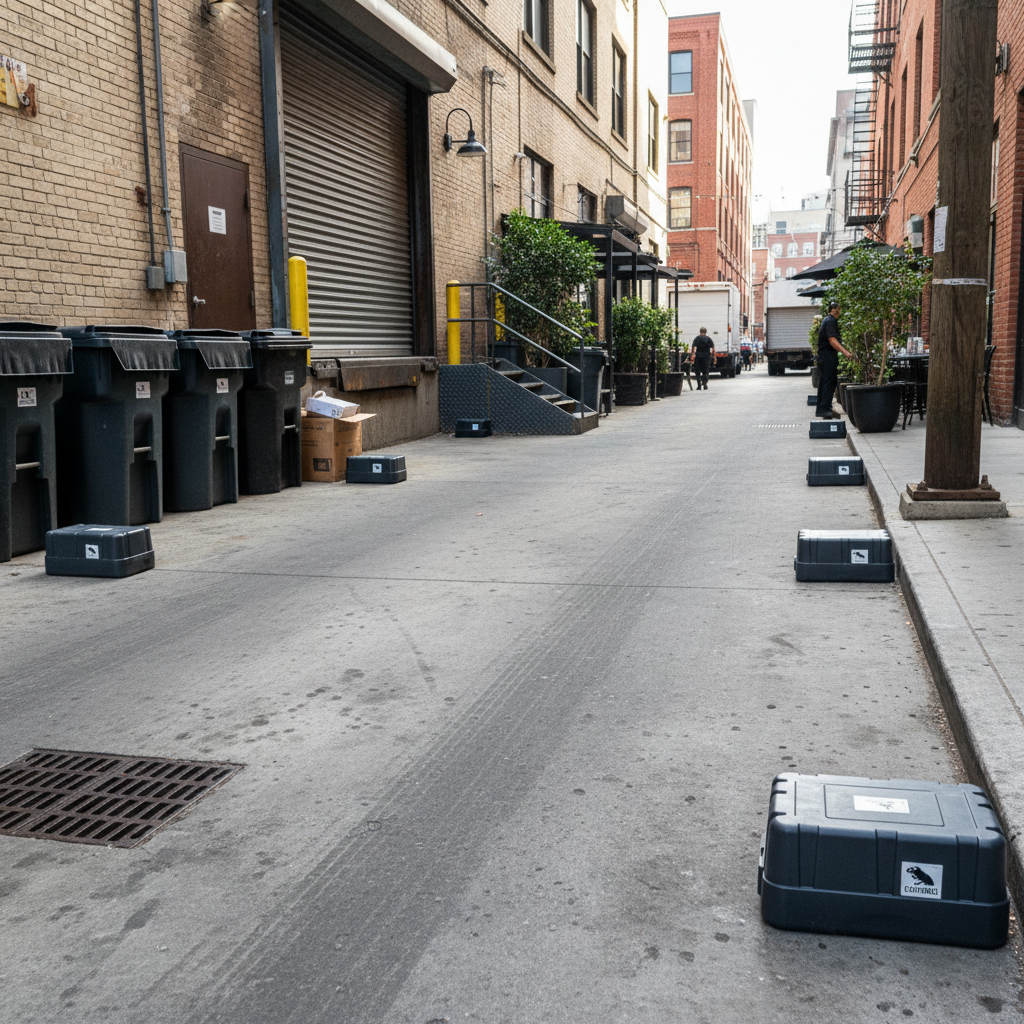
Restaurant grease traps and floor drain networks are primary rodent attractants in strip mall and street-level F&B. Roof rats access ceiling voids through gaps around water pipes and conduit entries. In restaurant groups sharing a building, one infested unit creates pressure on adjacent outlets through shared wall cavities.
MUNICIPALITY REQUIREMENT
DM inspectors check for rodent droppings, gnaw marks, and grease smears during routine food safety audits. Evidence of rodent activity results in immediate improvement notice with 48-hour compliance deadline. Restaurants with outdoor dining require perimeter bait stations documented on a site plan.
TREATMENT PROTOCOL
Full grease trap and drain network inspection — primary harbourage and access routes
Ceiling void survey via access panels for roof rat activity signs
Tamper-resistant bait stations at all external perimeter points and loading areas
Internal snap trap matrix in non-food storage areas
Foam exclusion of all utility penetrations through walls and floor slabs
Outdoor dining perimeter treatment with locked bait stations per DM site plan
ONGOING MONITORING
Bi-weekly monitoring visits with digital catch records. Site plan showing all bait station locations kept on file for DM inspection presentation.
FIELD RESULT
Resolved active roof rat infestation across 4-outlet restaurant group in Business Bay within 21 days. All 4 DM food safety audits in subsequent quarter: zero rodent observations.
Rodent Control — Warehouse

CAUSE & VECTOR
Warehouses in Al Quoz and Dubai Industrial City face Norway rat pressure from adjacent open land and municipal drainage systems. Palletised food products and cardboard packaging provide nesting material and food source. Loading dock doors left open during shift changes create 4–6 hour uncontrolled entry windows daily.
MUNICIPALITY REQUIREMENT
Food-grade warehouses require documented rodent control as part of HACCP Prerequisite Programme. Free zone authority annual inspections check for rodent evidence in storage areas. Product damage from rodent gnawing creates liability under Dubai commercial law.
TREATMENT PROTOCOL
Full perimeter bait station network: stations every 10 metres around building exterior
Loading dock door seal audit and commercial door sweep installation
Internal bait station matrix on rack perimeter and in false ceiling voids
Pallet quarantine zone inspection protocol for all inbound deliveries
Tracking powder application in suspected rat runs and ceiling voids
Drain pipe collar installation at all external drain entry points
ONGOING MONITORING
Weekly bait station checks during active programme, bi-weekly for maintenance. Annual HACCP rodent control report for free zone authority and client auditors.
FIELD RESULT
Eliminated Norway rat activity in 8,500 sqm FMCG warehouse in Al Quoz within 28 days. Product damage claims: zero in 12 months following treatment programme.
Rodent Control — Residential Tower
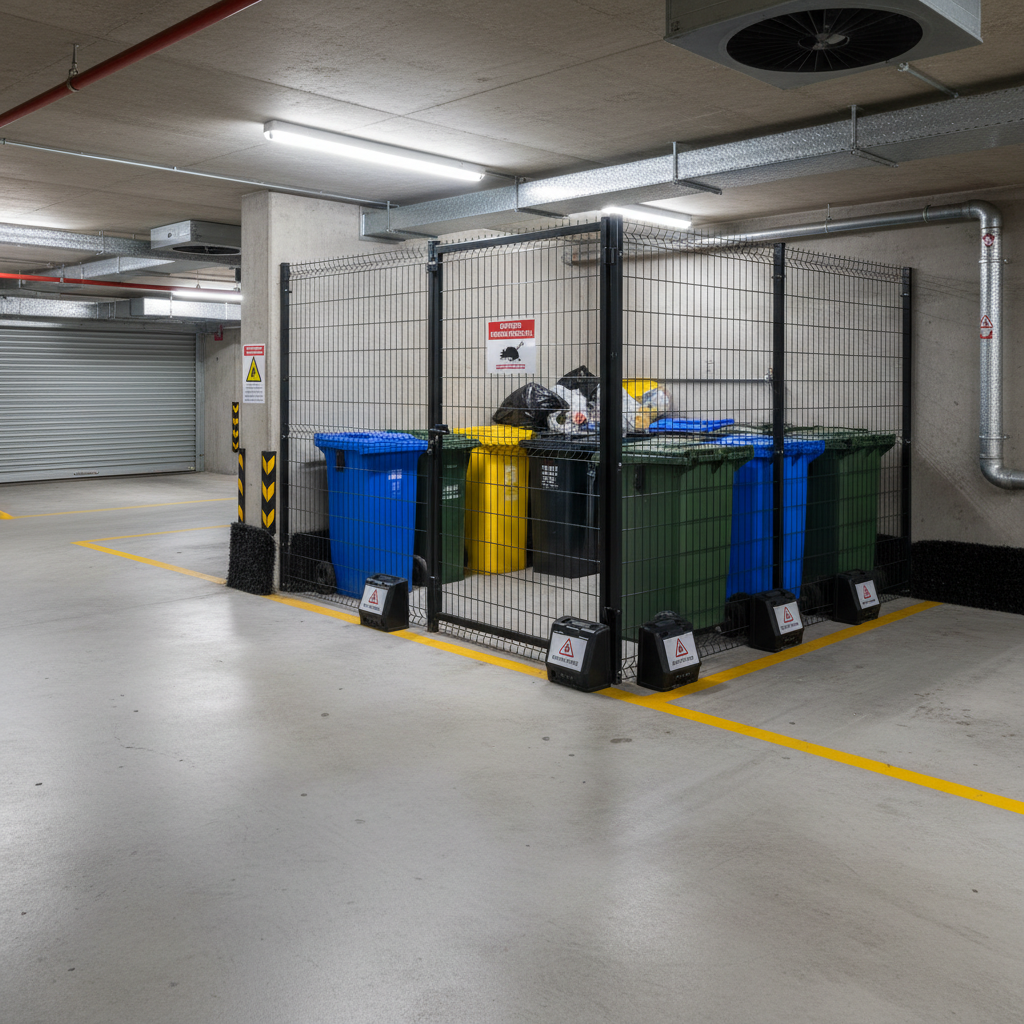
CAUSE & VECTOR
Basement parking decks and ground-floor retail in mixed-use towers create rodent pressure on residential floors through shared utility shafts. Food waste accumulation in bin rooms and compactor areas provides a sustained food source. Roof-level water tank rooms and plant rooms are common roof rat harbourage zones in older Deira towers.
MUNICIPALITY REQUIREMENT
Building management is responsible for rodent control in all common areas under Dubai Municipality building regulations. RERA can impose fines on building management companies for sustained rodent infestations affecting tenant habitability. Bin room treatment must be documented.
TREATMENT PROTOCOL
Basement and parking deck survey: all drain sumps, utility rooms, and perimeter gaps
Bin room deep clean and bait station installation with weekly monitoring
Roof plant room and water tank room inspection and trap deployment
Shared utility shaft survey with bait station placement at each floor access point
Physical exclusion of all ground-floor retail interface points with residential areas
Resident communication and unit-level inspection programme for consenting tenants
ONGOING MONITORING
Monthly common area inspection with building management sign-off. RERA compliance report available on request.
FIELD RESULT
Cleared Norway rat activity from bin rooms and basement of 28-floor Deira residential tower in 21 days. Building management RERA compliance file updated with zero outstanding pest observations.
Bedbug Control — Hotel
One verified guest complaint to DTCM initiates a formal investigation. First 24 hours are critical for containment before the complaint is registered.
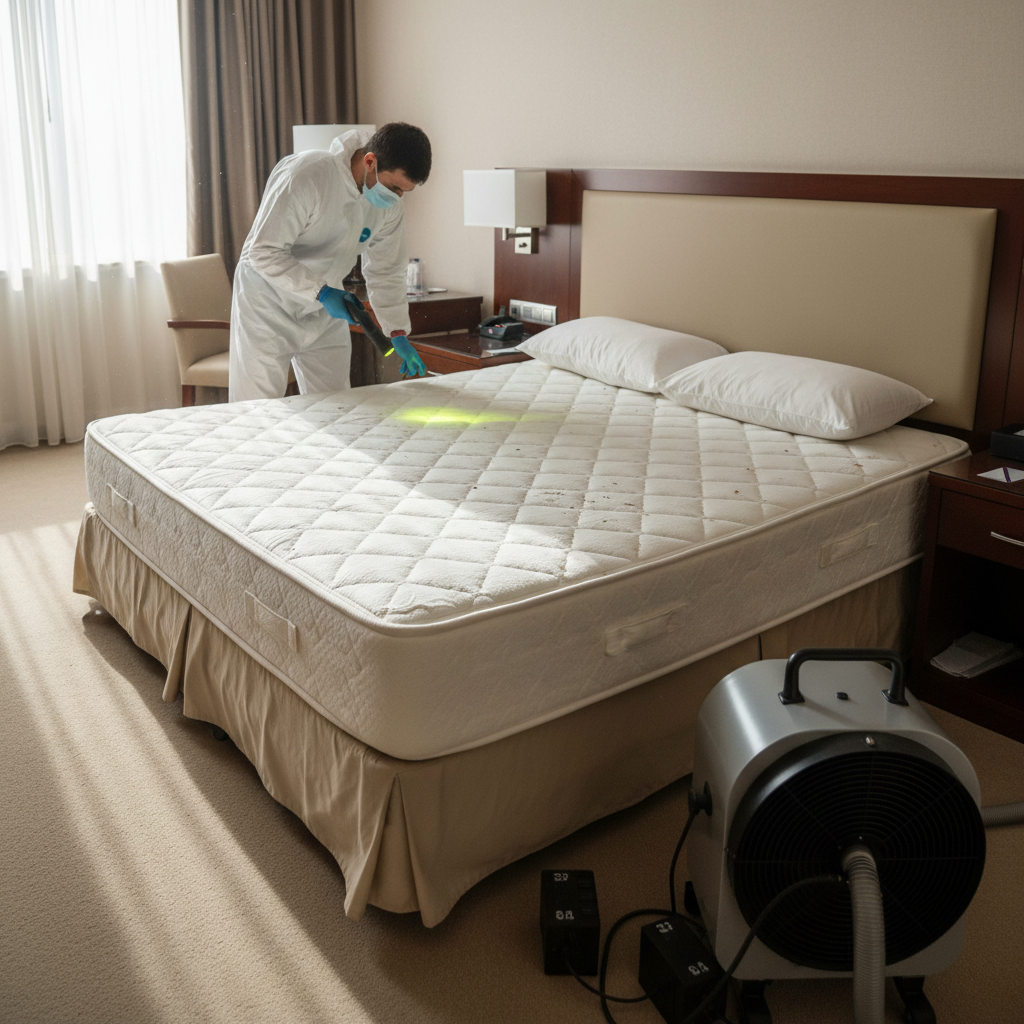
CAUSE & VECTOR
Cimex lectularius (common bedbug) enters hotels exclusively via guest luggage and secondhand furniture. A single infested room, if untreated, seeds adjacent rooms through shared wall voids and electrical conduits within 30 days. Bedbugs can survive 12 months without feeding at room temperature, making reactive treatment insufficient.
MUNICIPALITY REQUIREMENT
Dubai Tourism (DTCM) hotel classification standards require documented pest control for all guest areas. A verified bedbug complaint triggers mandatory room closure and treatment before re-letting under DTCM operational guidelines. Hotels must maintain treatment records for DTCM annual inspection.
TREATMENT PROTOCOL
Full room inspection using CO₂ detection and UV torch — mattress, headboard, skirting
Heat treatment (56°C for 90 minutes) for affected rooms — kills all life stages including eggs
Residual insecticide treatment of wall voids, electrical outlets, and skirting boards
Adjacent room inspection and precautionary treatment protocol
Mattress and box spring encasements on all treated beds
Luggage rack repositioning away from walls — standard housekeeping protocol briefing
ONGOING MONITORING
CO₂ bedbug monitors installed in treated rooms for 90-day post-treatment monitoring period. Monthly inspection with written clearance certificate for DTCM file.
FIELD RESULT
Cleared active bedbug infestation across 12 affected rooms in 4-star Deira hotel within 72 hours using heat treatment. Zero guest complaints in subsequent 8-month monitoring period.
Bedbug Control — Restaurant
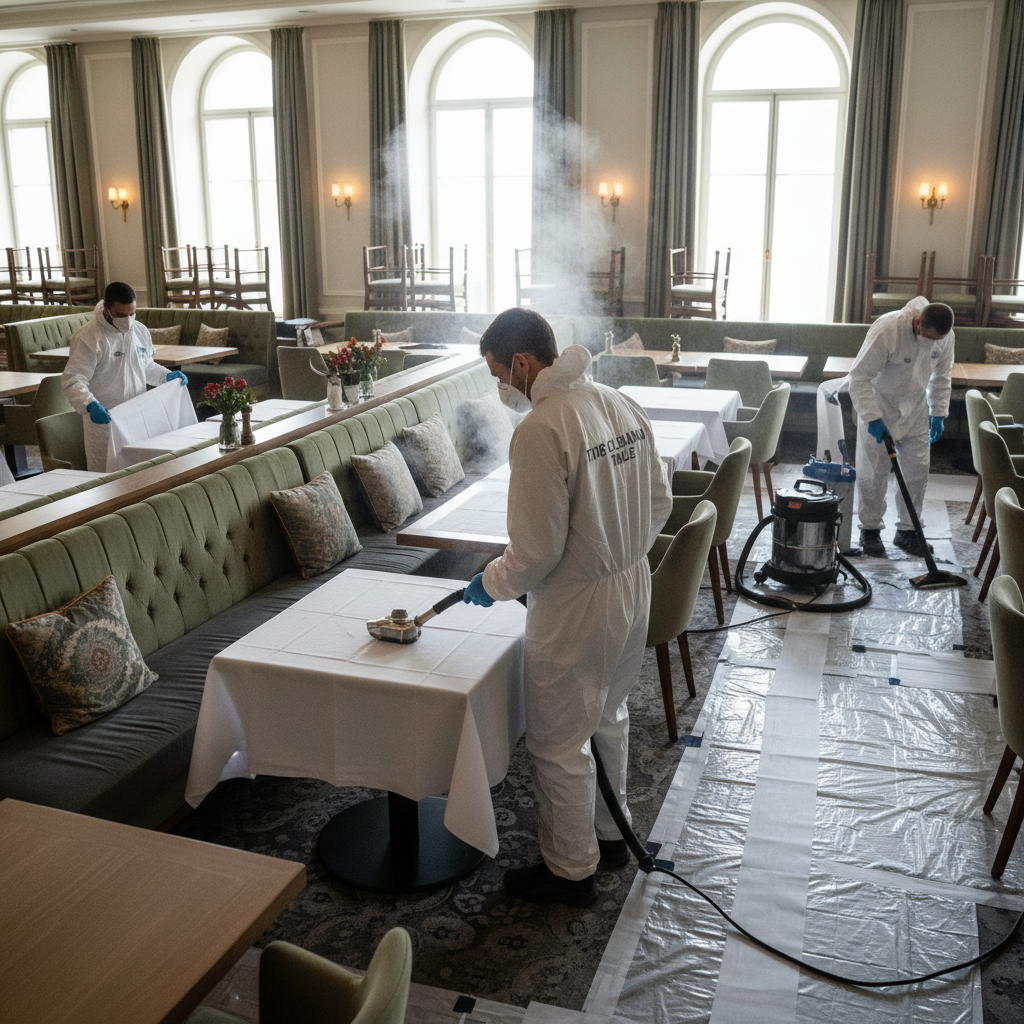
CAUSE & VECTOR
Restaurants with soft seating, booth upholstery, or banquette seating can harbour bedbugs introduced via staff or delivery personnel. While less common than in hotels, infestations in restaurant soft furnishings generate disproportionate social media exposure if discovered by a guest.
MUNICIPALITY REQUIREMENT
DM Food Safety covers all areas accessible to the public. Bedbug evidence in a restaurant triggers the same corrective action requirements as any other pest. Seating area treatment records must be available for DM inspection.
TREATMENT PROTOCOL
Full soft furnishing inspection: all upholstered seating, booth backs, cushions
Steam treatment of all upholstered surfaces at 120°C
Residual insecticide treatment of seating frame joints, skirting, and carpet edges
Replacement assessment: heavily infested items removed and replaced
Staff changing room and locker area inspection
Preventive monitoring stations under all upholstered seating
ONGOING MONITORING
Monthly soft furnishing inspection with written report. Any new sighting triggers 48-hour emergency treatment response.
FIELD RESULT
Cleared bedbug activity from 180-cover Jumeirah restaurant with booth seating in 5 days. Zero guest complaints or social media mentions in 12-month post-treatment period.
Termite Control — Warehouse
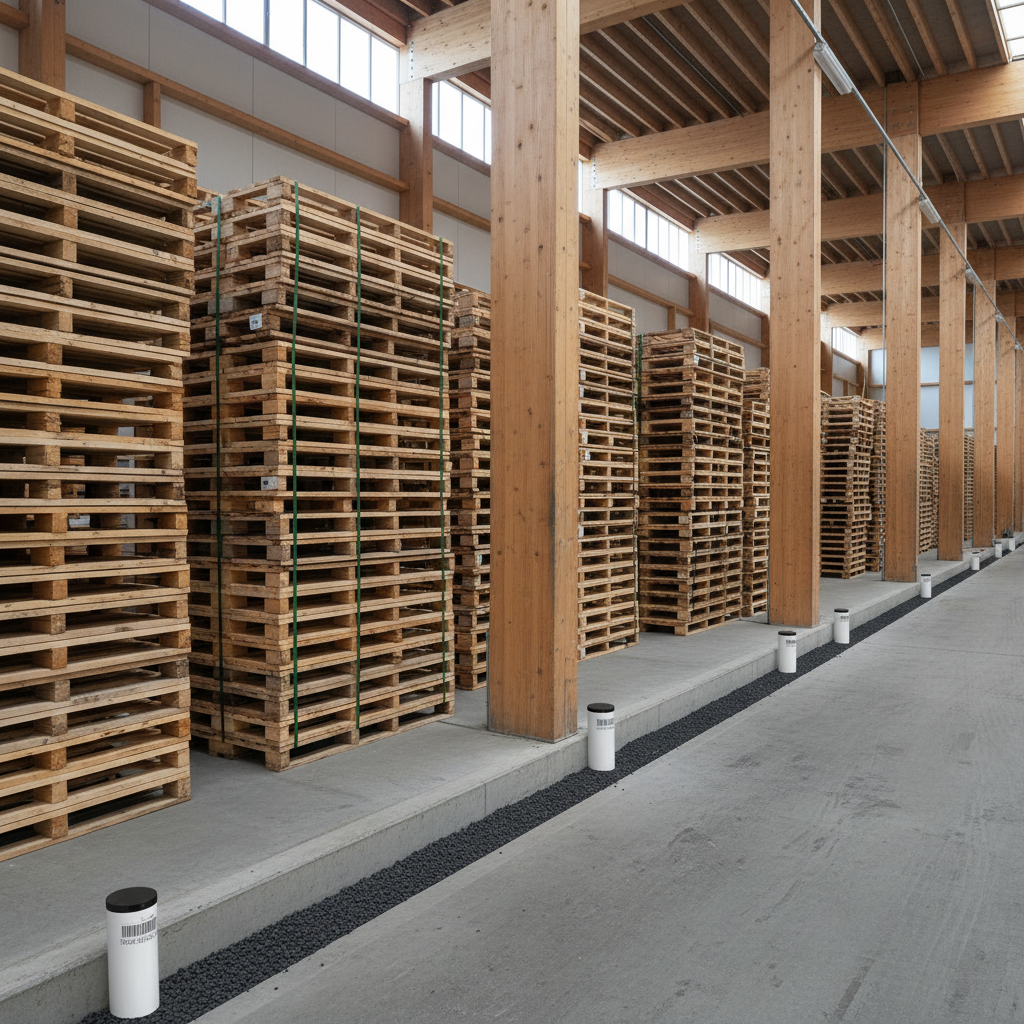
CAUSE & VECTOR
Subterranean termites (Coptotermes gestroi) are endemic to Dubai soil and aggressively target wooden pallet boards, MDF racking components, and structural timber in older warehouses. A mature colony of 500,000 workers can consume 400g of wood daily. Warehouses built before 2010 frequently lack sub-slab termite barriers.
MUNICIPALITY REQUIREMENT
New construction in Dubai requires termite pre-construction soil treatment under Dubai Municipality Building Code. Existing buildings with termite activity must demonstrate treatment within 30 days of discovery. Insurance policies for commercial property in Dubai increasingly require documented termite warranties.
TREATMENT PROTOCOL
Full structural survey: all timber elements, pallet storage areas, and sub-floor access
Termite bait station network installation around building perimeter
Liquid termiticide soil injection barrier around building foundation
Infested timber treatment with boron-based product and structural assessment
Pallet inspection protocol: all wooden pallets inspected quarterly
Sub-slab injection treatment where floor access permits
ONGOING MONITORING
Monthly bait station inspection with termite activity log. Annual soil barrier re-treatment as required. 10-year warranty available with annual inspection programme.
FIELD RESULT
Eliminated active subterranean termite infestation in 6,000 sqm Al Quoz warehouse with wooden mezzanine structure. Annual warranty maintained for 4 consecutive years with zero structural damage progression.
Termite Control — Residential Tower
CAUSE & VECTOR
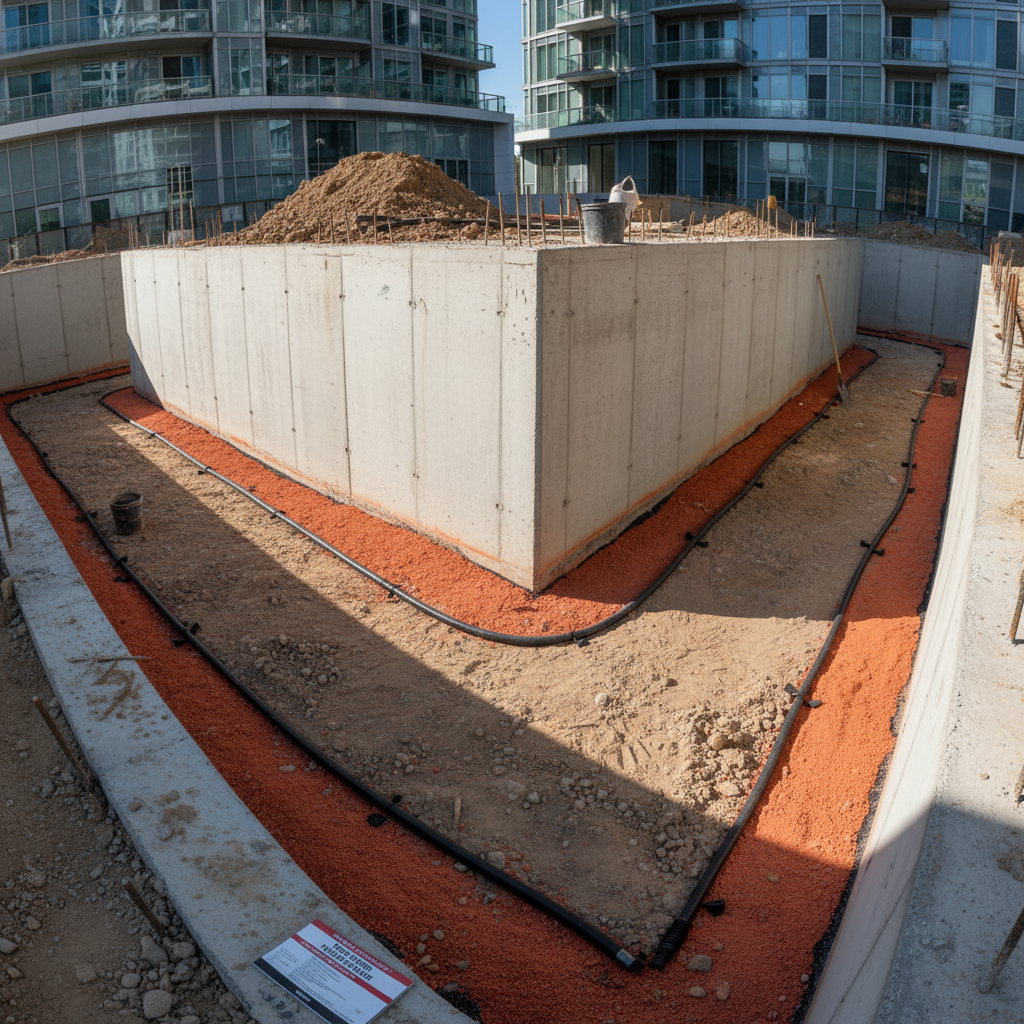
Older residential towers in Deira and Bur Dubai with original 1990s construction may have compromised sub-slab termite barriers. Ground-floor retail fit-outs using timber flooring and MDF joinery provide entry points. Termite mud tubes travel vertically through wall cavities and can reach upper floors via service shafts.
MUNICIPALITY REQUIREMENT
Building owners have liability for structural damage caused by untreated termite infestations under Dubai property law. RERA requires building management to demonstrate maintenance of the building envelope, which includes pest exclusion.
TREATMENT PROTOCOL
Ground-floor and basement structural survey for mud tube evidence
Wall cavity inspection via borescope camera at suspected entry points
Perimeter bait station network with monthly monitoring
Liquid termiticide injection at all identified entry points and soil interface zones
Ground-floor retail fit-out inspection and treatment coordination with tenants
Annual structural survey report for building management RERA file
ONGOING MONITORING
Quarterly structural survey of ground floor and basement. Annual full building report for RERA compliance file.
FIELD RESULT
Contained and eliminated termite activity across ground floor and basement of 1998-built Deira residential tower. Zero structural damage claims in subsequent 3 years of annual monitoring.
Bird Control — Hotel
CAUSE & VECTOR
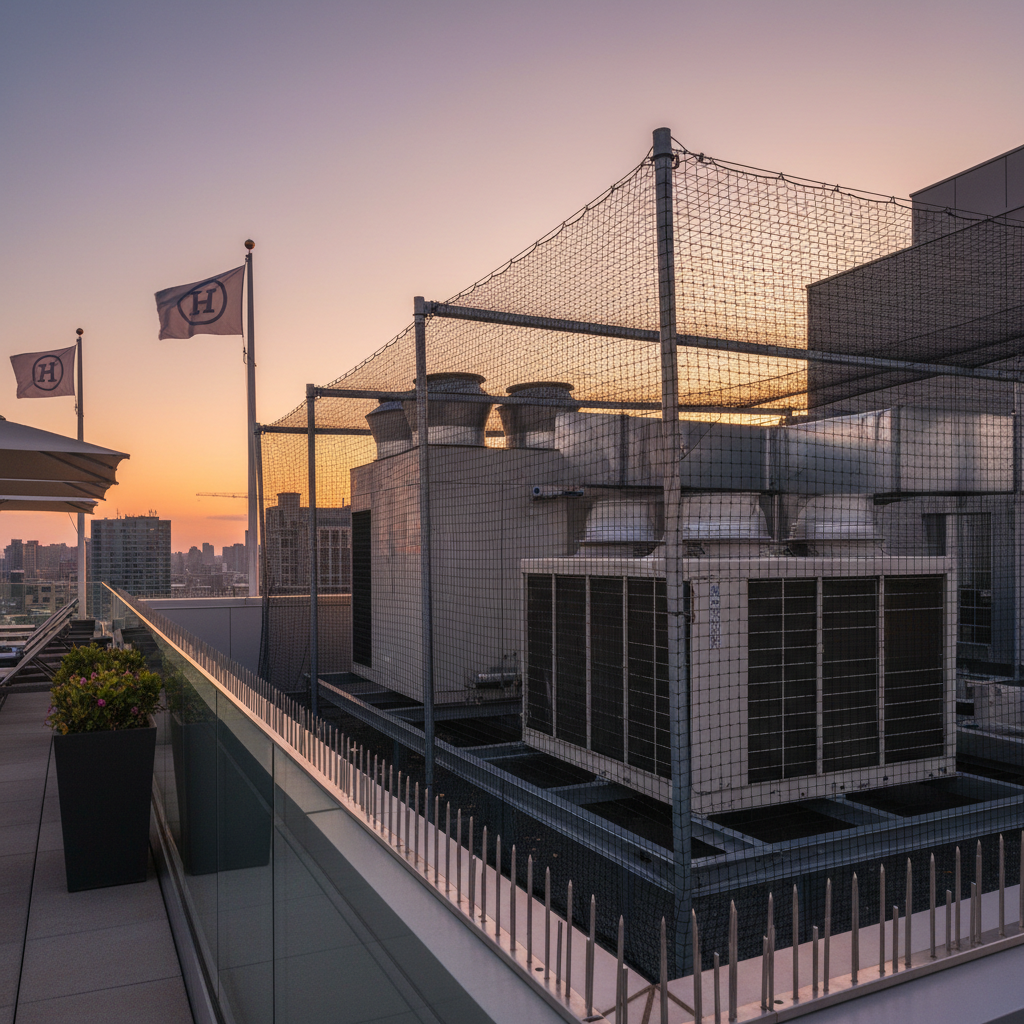
Feral pigeons (Columba livia) roost on hotel balconies, HVAC equipment platforms, and signage ledges. Pigeon droppings create slip hazards, accelerate concrete corrosion, and carry Histoplasma capsulatum and Cryptococcus neoformans — pathogens of concern for HACCP-regulated food areas. A single roosting pair becomes a flock of 50 within 18 months.
MUNICIPALITY REQUIREMENT
Dubai Municipality requires that bird fouling in food areas be addressed under HACCP Prerequisite Programme. DTCM hotel standards prohibit visible bird fouling on guest-facing areas. Removal of active bird nests may require DM wildlife department notification for protected species.
TREATMENT PROTOCOL
Full roof and facade survey: all ledges, HVAC platforms, signage, and balcony rails
Bio-security clean: full removal of droppings and nesting material with PPE protocol
Anti-perch spike installation on all roosting ledges and HVAC platforms
Bird netting installation over open courtyards and pool deck structures
Optical gel deterrent on signage and architectural features where spikes are unsuitable
Balcony netting programme for guest floors with active pigeon pressure
ONGOING MONITORING
Quarterly inspection of all deterrent installations with maintenance report. Annual bio-security clean of roof areas.
FIELD RESULT
Eliminated pigeon roosting from 5-star hotel roof terrace and pool deck in Jumeirah within 6 weeks. DTCM inspection 3 months post-treatment: zero bird-related observations.
Snake Control — Warehouse
Carpet viper (Echis carinatus) is present in Al Quoz area. Venomous. Do not approach. Call our emergency line: +971 4 XXX XXXX.
CAUSE & VECTOR
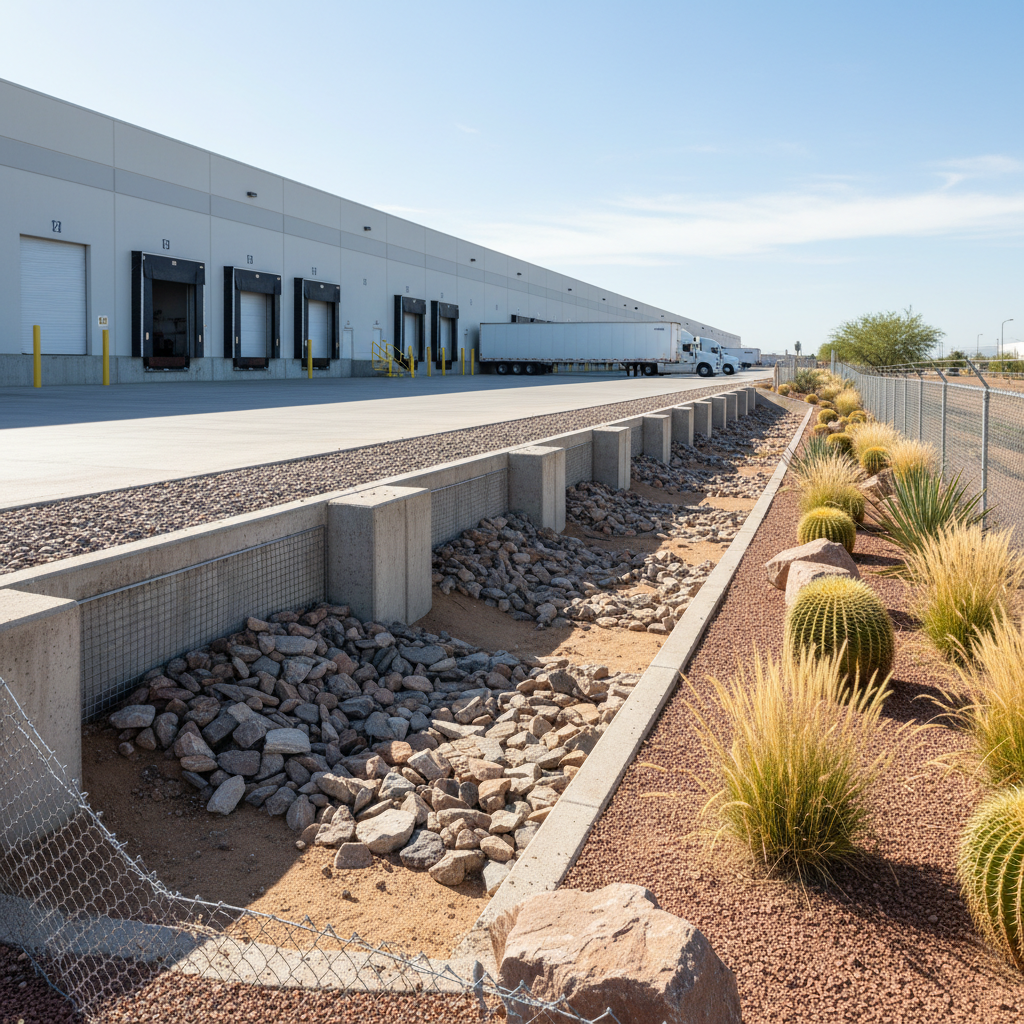
Sand boas and carpet vipers enter warehouse perimeters through loading dock gaps and landscaping soil adjacent to building foundations, particularly in Al Quoz and Dubai Industrial City facilities bordering desert land. Snake activity increases in autumn (October–November) and spring (March–April) as temperatures moderate. Rodent infestations attract snake predators.
MUNICIPALITY REQUIREMENT
Dubai Municipality requires reporting of venomous snake sightings in commercial premises. Al Quoz and Dubai Industrial City facilities have specific DM protocol for snake removal — self-removal is prohibited for venomous species. Staff safety requires documented emergency response procedure.
TREATMENT PROTOCOL
Perimeter survey: all gaps at ground level, landscaping interface, and drain openings
Commercial-grade door sweeps on all loading dock doors — 6mm maximum ground clearance
Glue board matrix inside loading dock and ground-floor utility rooms
Rodent control programme — eliminates primary prey attractant
Staff emergency response briefing: identification, non-approach protocol, contact procedure
DM-compliant removal and relocation for any captured specimens
ONGOING MONITORING
Monthly perimeter inspection during peak season (Oct–Nov, Mar–Apr). Glue board check monthly with replacement as required. Staff briefing refresher annually.
FIELD RESULT
Managed 3 carpet viper entries at Al Quoz logistics facility over 6-month period. All incidents resolved within 2 hours using DM-compliant removal protocol. Zero staff injuries across all incidents.
Request a Technical Site Survey
Our technical team conducts a full entry-point survey and provides a written assessment within 48 hours. No obligation.
Dubai Municipality Pest Management Checklist
The 10-point pre-audit checklist covering DM Circular 2019 requirements. Download the full PDF for your food safety file — ready to present to a municipality inspector.
CHECKLIST PREVIEW — DM CIRCULAR 2019
Pest control contract with DM-approved contractor (active, not expired)
Monthly technician visit logs with signature and date
Gel bait placement map updated quarterly
Corrective action records within 24 hours of sighting
ILT catch count records — 12 months retained
+5 more items in full PDF